How to ask the chart about entry timing on USDJPY
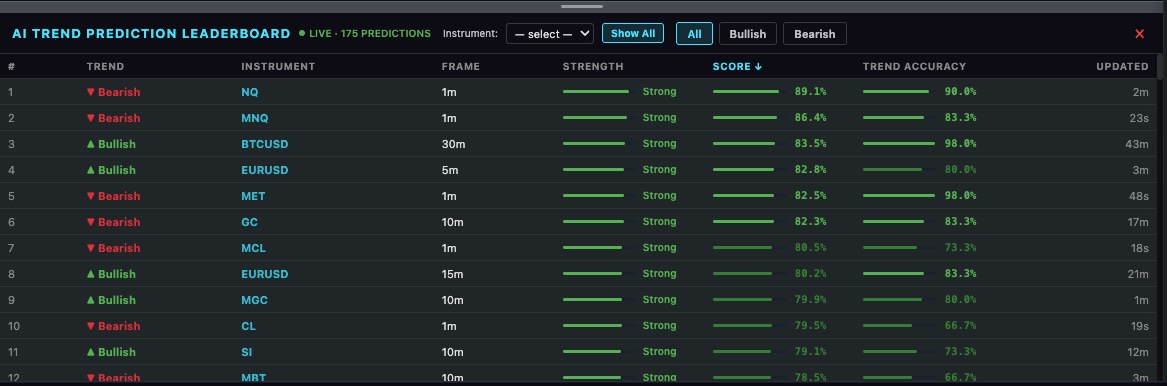
Most charting tools only show you what already happened. What makes LiveCharts.AI different is that you can actually talk to the chart itself. Instead of leaving the workspace to search for answers, you type a question in plain English right on the chart and the AI reads from the data you have open — historical price action, forward predictions, indicator panels, and market structure. This page walks through how to ask the chart about entry timing on USDJPY and what to expect from the response.
The first thing to understand is that the chat only discusses what is genuinely on your screen. If you have a 30-minute chart of USDJPY open with its predicted candles and indicator panels, the AI can reason about that data specifically. It is not a general-purpose assistant guessing at a market it cannot see. That grounded, chart-aware design is the core of the feature — you ask about the setup you are actually looking at, and the answer is read from the projection on that chart.
Practically, you might ask the chart about entry timing. The AI looks at the forward candles, the predicted indicators, and the trend structure on your 30-minute chart of USDJPY, then responds with a concrete read: a suggested direction, an entry area, a stop, a target, and the reasoning behind each level. It can also flag the dollar risk on the setup and explain what would invalidate the idea. You are still making the call — the chat is giving you a clearer picture to decide from.
Because the chat is tied to your open charts, it adapts to what you are working on. Pull up USDJPY on a 30-minute chart and you can ask the chart about entry timing with context. Open a second instrument or another timeframe and the AI can compare them — for example, whether the 1-minute agrees with the 1-hour, or which of your checked charts has the stronger expected read. That multi-chart awareness is a big part of why traders describe the feature as an assistant rather than a chatbot.
It also handles the questions traders actually ask in the moment. You can interrogate a divergence the chart is showing, ask whether momentum is strengthening on a given timeframe, check where volatility is likely to expand or contract, or ask the chart to explain a setup like a professional trader would. Each question is answered from the data on your screen, which keeps the conversation focused and avoids the invented signals that plague general-purpose trading bots.
On iPad, the experience is the same conversation you would have at your desk. The chart, the AI chat column, and the leaderboard work together, and anything you set up carries across devices. So a 30-minute read of USDJPY you start on one screen can be continued on another without losing context.
To try it yourself, open a free trial at https://livecharts.ai, put up a 30-minute chart of USDJPY, and type a question in the chart chat. Ask it to ask the chart about entry timing and watch it build an entry, stop, and target with reasoning you can read. Then use the trade simulator to track the setup with no money at risk.
As with any tool, the chat is for information and education, not a guarantee of outcomes. Use it to understand a setup more completely, set realistic risk before you enter, and keep your own discipline front and center. The chart can help you see more clearly — the decision and the risk remain yours.
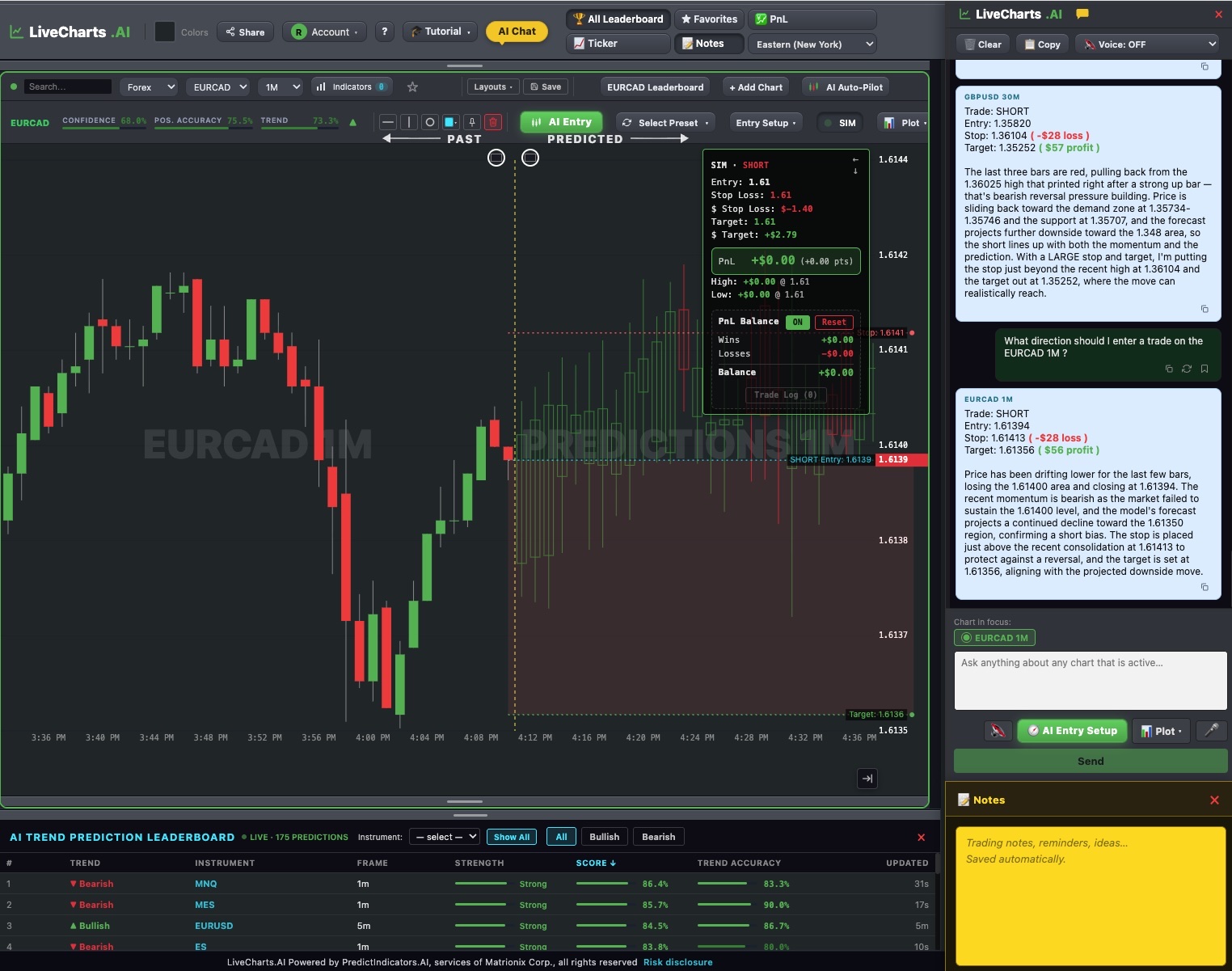
Chat directly with the chart on USDJPY inside LiveCharts.AI — ask questions, get entry suggestions, and read your setup in plain English.
See live predictions on LiveCharts.AI →LiveCharts.AI disclaimer: trading involves risk of substantial loss and is not suitable for every investor. LiveCharts.AI provides technical analysis tools and AI-generated predictions for educational and informational purposes only; outcomes vary and individual results may differ from any examples shown. Historical performance is not indicative of future outcomes. Only invest capital you can afford to lose and consult a licensed financial advisor before making investment decisions.